

First things, first. Be sure to register for our discussion on October 28. Dr. Brian Kwoba will be joining us! And as always, if you haven’t read the book, you are still very welcome to attend.
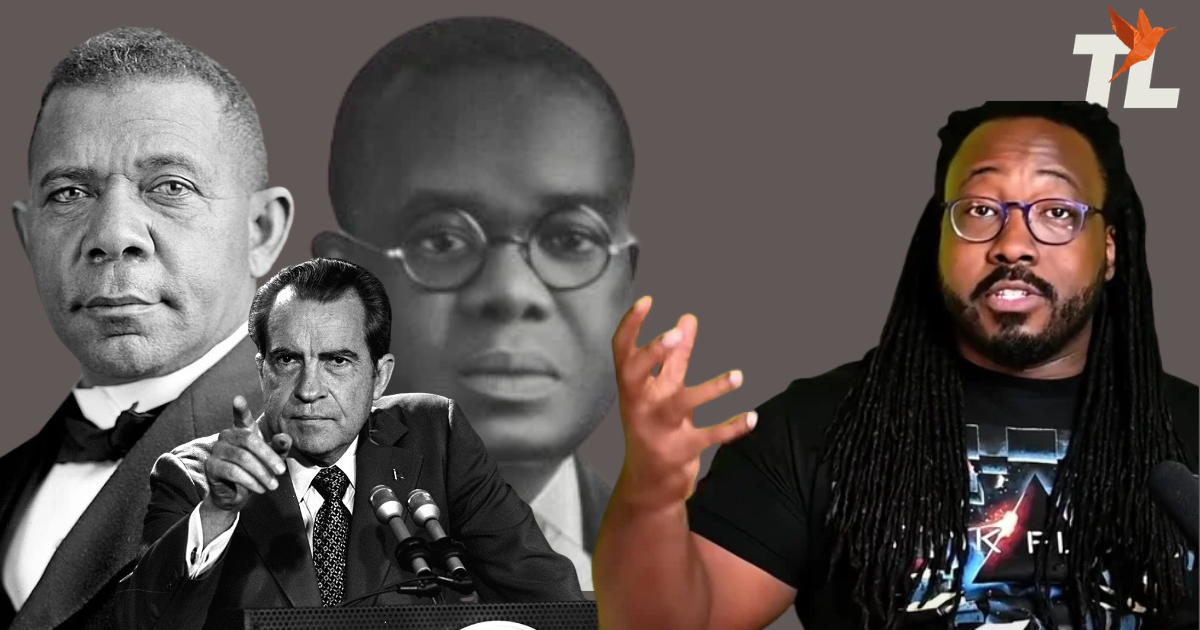
Assuming your social media feeds have a radical bent, if you were online at all last week, you surely encountered comments about F.D Signifier’s video Fallen Idols: How Black Leaders Fail Us. Upon hearing it tipped the clock at 4+ hours, maybe, like me, you decided to see what could be gleaned from the commentary rather than invest the time to listen to it. However, I’ll say upfront that I highly recommend watching the episode in its entirety. It was an experience, to say the least. Here I’ll list four reasons I found it incisive, unapologetic, enlightening, and ultimately hopeful. The way he chooses to conclude what amounts to a four-hour, radically educational takedown is why I recommend watching it all the way to the end.
Booker T. Washington
When I decided to watch it, I had no idea Dr. Brian Kwoba, author of our current read, Hubert Harrison: Forbidden Genius of Black Radicalism, would be quoted in the first hour. Explaining the historical significance of Booker T. Washington (BTW) is foundational to the video’s arguments about the Black Misleadership class, of which BTW may very well be the founding father. What F.D Signifier does not touch on in the video because it isn’t pertinent to his point, but something I found compelling in the book, is the extent to which BTW was an incredibly harmful figure. I, and I suspect many others, had come to view him as someone who had ideological differences. Two sides of the same strategic coin, if you will. However, the book reveals the role he played in thwarting Hubert Harrison’s work. BTW used his connections to get HH fired from his postal job because of his radical writings.

Obama
In several TL posts, I’ve addressed the problem with Obama if you will. F.D Signifier offers a very thorough critique situated in deconstructing Obama’s rise to leadership and who ultimately benefitted materially from the nation’s first Black President.
Misleadership Class
“When the axe came into the forest, the trees looked at its wooden handle
and said, ‘Oh, it’s one of us.’”
from: The Role of Black Misleadership Today by Tamar Wilson
The video gives Booker T. Washington, Obama, and Oprah thorough treatment, with additional references to Jay Z and others. Ultimately, the figures discussed serve to make a broader point about how systems use individuals to carry out, continue, and cover up the oppression perpetuated by the ruling class.
Black Capitalism & Nixon
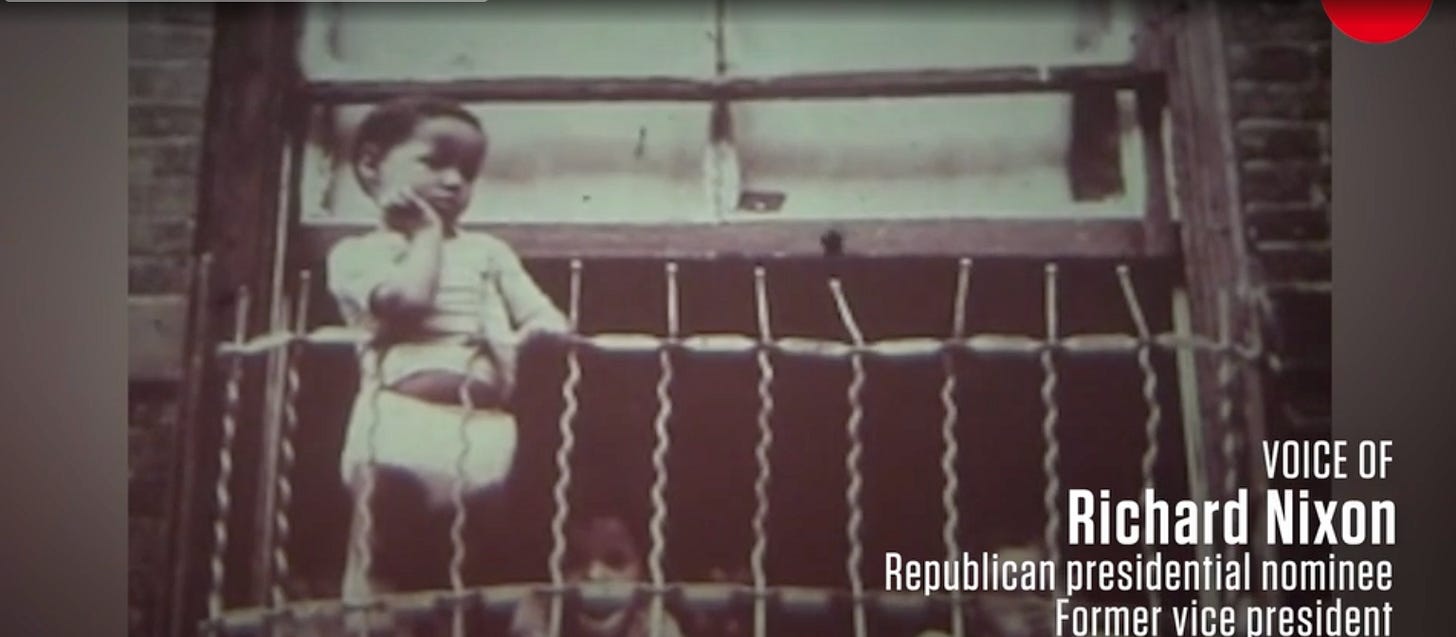
Image fromA never aired 1968 Richard Nixon ‘Black Capitalism’ ad | Source: Nixon Presidential Library Archives via Politico

“With your help I will begin a new program to get private enterprise into the ghetto, and the ghetto into private enterprise. I call it Black Capitalism. More Black ownership of business and land and homes can be the multipleir of pride that will end our racial strife. The Black man’s pride is the White man’s hope.”
-Richard Nixon
Throughout this video, F.D Signifier makes many salient points about capitalism.
As Alan, Maya, and I have touched on in multiple posts, addressing the evils of and ultimately eradicating racial capitalism as the engine that runs society is essential to an abolitionist future. And F.D Signifier makes important contributions to the ongoing effort to battle the entrenchment of capitalist propaganda rampant throughout all facets of American life, which falsely renders it helpful, necessary, or at the very least benign. And in a very surprising, yet unsurprising twist, at least for me, I learned that promoting Black capitalism was a tactic of Nixon. The same Nixon, most popularly known for the Watergate scandal, who should be even more infamous for declaring the War on Drugs and advancing Black Capitalism, two of the most destructive forces in Black American life, both designed to thwart the gains made by Black radicals in the 1960s.
“The evidence suggests that although Nixon did not achieve his institutional goals (campaign promises) related to Black capitalism, he did, indeed, achieve his larger ideological goal of subverting African American radicalism.”
-from The National Response to Richard M. Nixon's Black Capitalism Initiative: The Success of Domestic Detente by Robert E. Weems, Jr. and Lewis A. Randolph
These are just a few highlights from a very thorough and necessary critique. If you have a chance to watch, please share your thoughts with us in the comments. And if not, make sure you join us on October 28 when we discuss Hubert Harrison: Forbidden Genius of Black Radicalism with Dr. Kwoba. I’m sure the video will be part of our discussion.
In solidarity,
connease
ps. I would be remiss not to mention that, while deconstructing the Black misleadership class is important to our understanding of how racial capitalism functions, I must emphasize a critical point. Since this post will absolutely land in what Black people call “mixed company,” we must center the role calculated systemic oppression plays here even more than the individuals critiqued. In other words, while we can and should take Booker T. Washington, Obama, Oprah, Jay-Z, Killer Mike, and others in the Black misleadership class to task, that critique must never exist absent an awareness of the nefarious and relentless efforts to entrench racial capitalism further by the primary beneficiaries of racial capitalism who are not, and never will be, Black people. By design.
Yes, FD's video essay was so well put together (as always)!
Among so many things, I appreciated how explicit he was about the latter part of the essay being a "calling in" for Killer Mike, not a "calling out." A poignant, few-punches-pulled calling in, but one still done with empathy.