

January at Toward Liberation set our tone for the year, inviting you not only to think about revolution theoretically, but to engage with what revolutionary politics and abolitionist imagination look like in practice, critique, and community. Below are some highlights from the three posts we published last month with key excerpts and reflections you won’t want to miss.
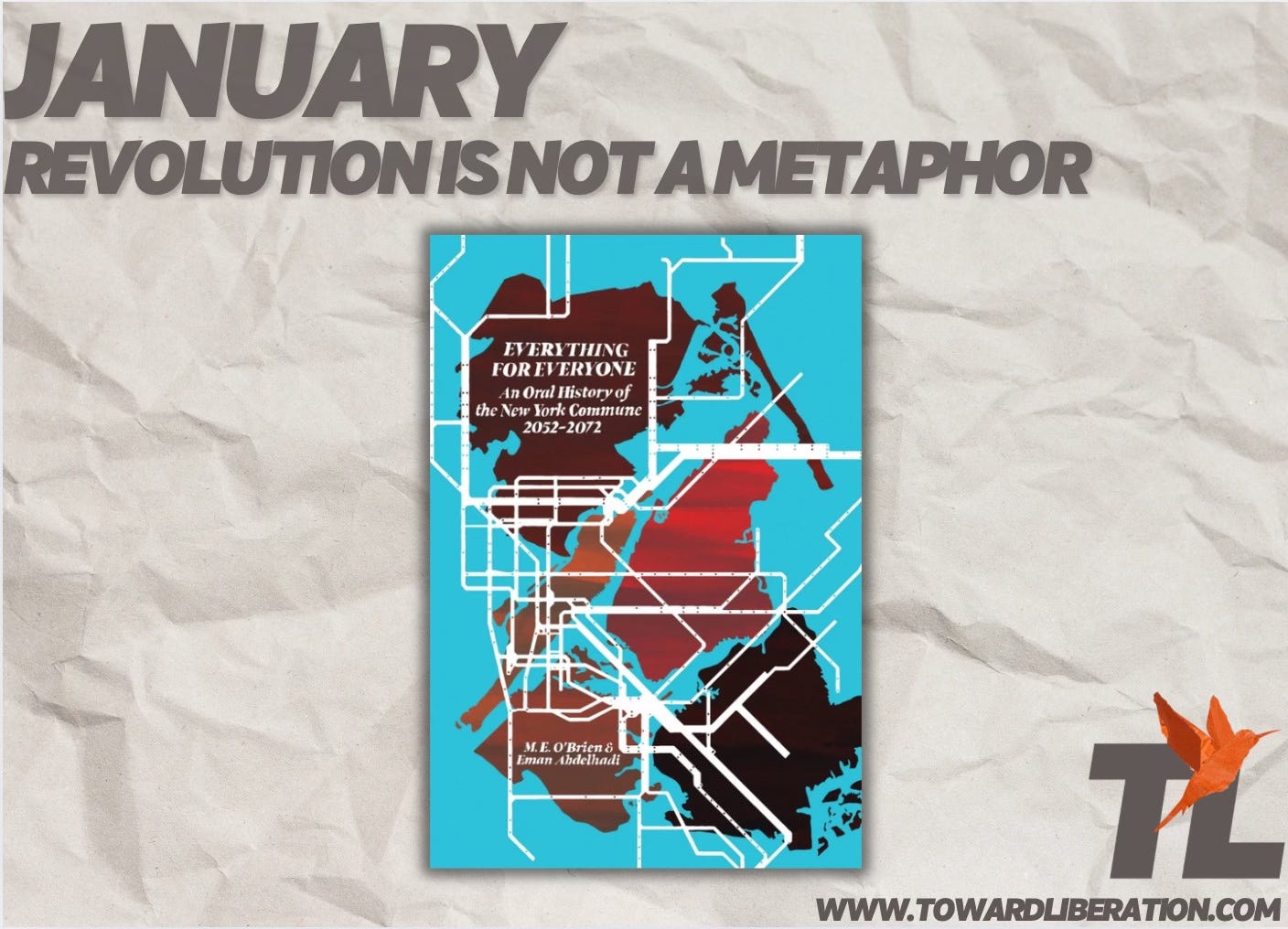
Revolution Is Not a Metaphor
We kicked off the year with something that needed to be said—revolution is not a poetic trope; it’s a material, political project.
As Alan argued:
“History shows us that abolitionist futures are not granted; they are wrested into being through rupture. Through revolution. And revolution, if we’re honest, carries implications that are unsettling, including confrontation and violence, not because we desire harm, but because systems built on violence rarely dissolve peacefully.”
This piece invited you to confront how mainstream culture often neutralizes radical thought by flattening it into symbolism. Revolution requires clarity—not metaphorical gloss—and a willingness to confront power on its own terms.
2026 with Toward Liberation
Our mid-January video post offered a community update and a look forward into the year ahead. Centered on shared struggles, collective wins, and what’s next for our learning group, the piece grounded our abolitionist practice in the present moment.
As connease shared:
“It’s important for people to ground themselves in the fact that even though it seems that this administration is more violent, more blatant, these things are part of a continuum. And that’s why it’s important that we read. That’s why we’re doing what we do in Toward Liberation, to help ground people in a historical perspective, and even more importantly, to learn about tools of resistance.”
connease also shared news on a recent win, as we welcomed home Marie “Mechie” Scott, after 52 plus years of incarceration that highlights the importance of organizing, coalition building, and a relentless belief in each other and the struggle for liberation.
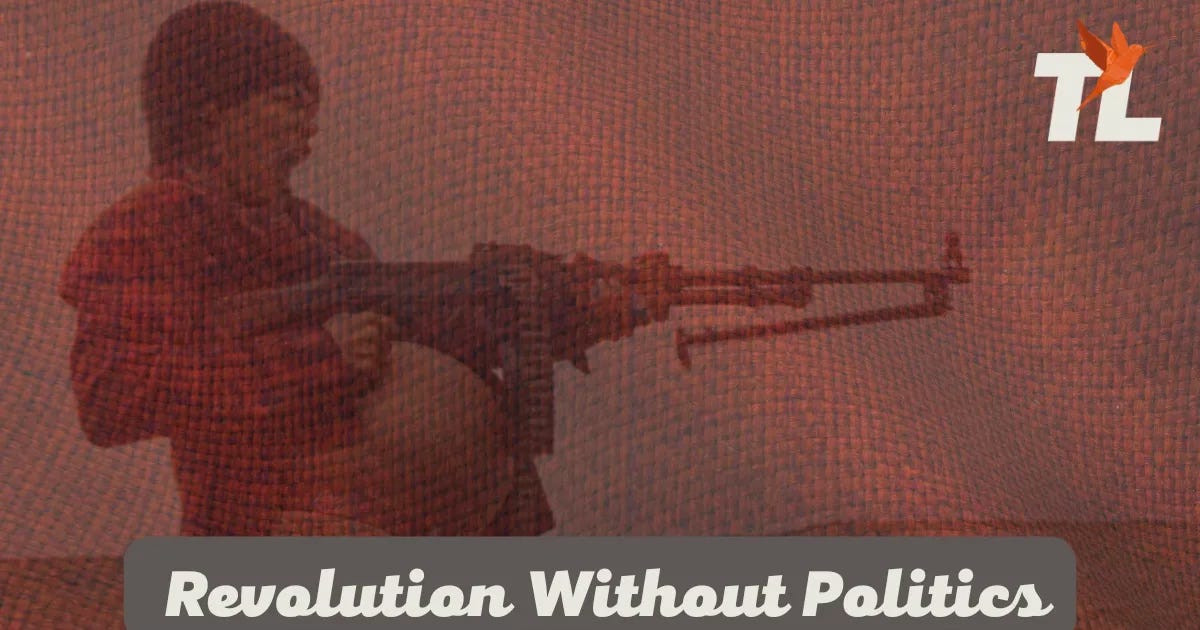
Revolution Without Politics: On One Battle After Another
Most recently, we turned our attention to how revolution is depicted in culture—in this case, through the widely discussed film, One Battle After Another. This was more than just a review of the film; rather, it challenged the film’s lack of any coherent political vision.
As Maya wrote:
“To say it plainly, this is not a film about revolution. One Battle After Another is a film that uses the aesthetics of revolution to empty it of politics, discipline, and purpose. In doing so, it reinforces the idea that radical movements are incoherent, unserious, and ultimately futile.”
The post argues that when revolutionary imagery is divorced from political substance, it risks reinforcing the very power structures it claims to challenge.
January’s posts put forward a shared insistence that revolution must be treated as something concrete, political, and lived rather than symbolic or rhetorical. Each piece, in its own way, pushes back against the softening of radical language — the tendency to turn liberation into metaphor, aesthetic, or spectacle. Instead, they call us back to substance; to the hard work of building collective power, sharpening political clarity, and staying rooted in community. Whether we are critiquing how revolution is flattened in popular culture, reflecting on the everyday practice of organizing together, or naming the limits of reformist imagination, the throughline is the same. Liberation demands more than feeling or sounding radical. It requires commitment, analysis, and shared struggle. January invited us to ground our hopes in practice and to remember that abolition is not an image or a slogan, but something we build with one another, step by step.
Looking Ahead
In February, we’ll keep building on these conversations through our ongoing community study. We’re continuing our collective reading of Everything for Everyone: An Oral History of the New York Commune, 2052–2072, a text that invites us to imagine abolition not simply as critique, but as presence—as the everyday textures of life after capitalism, after prisons, after policing. The book helps us stretch our political imagination beyond what exists now and into what could be built, offering a vision of liberation grounded in relationships, care, and shared responsibility.
We’re also excited to be joined on February 24th by co-author M. E. O’Brien for a live conversation about the book and the broader questions it raises about strategy, storytelling, and revolutionary possibility. We hope you’ll read along with us and join the discussion. As always, Toward Liberation is less a publication than a gathering place—a space to think together, learn together, and practice the kinds of political community that liberation requires.
In solidarity always,
Alan, connease, and Maya