

Today’s Supreme Court decisions will once again dominate the headlines. The Court ruled that states may prohibit transgender girls from participating in girls’ sports, delivering another blow to transgender people already facing relentless political attacks. In a separate decision, the Court preserved birthright citizenship—but only by a 5–4 vote, meaning that one retirement, one death, or one new appointment could place one of the most fundamental constitutional principles in U.S. law back on the chopping block.
Many people will respond the way they always do after controversial Supreme Court decisions by lamenting the ideological composition of the Court, calling for term limits, or demanding that Congress expand the number of justices. Others will celebrate the decisions they agree with and condemn those they do not.
I understand those reactions. But I think they miss the deeper problem. The more I’ve reflected on the role of the Supreme Court, the more I’ve come to believe that the institution itself is illegitimate.
This doesn’t mean I believe that every opinion issued by the Court has reached the wrong outcome. Some decisions have undoubtedly produced results I’ve welcomed. What I reject is something much more fundamental—the idea that the Supreme Court should possess the authority to determine the scope of our freedom in the first place.
If our rights depend on the votes of five justices, were they ever truly our rights?
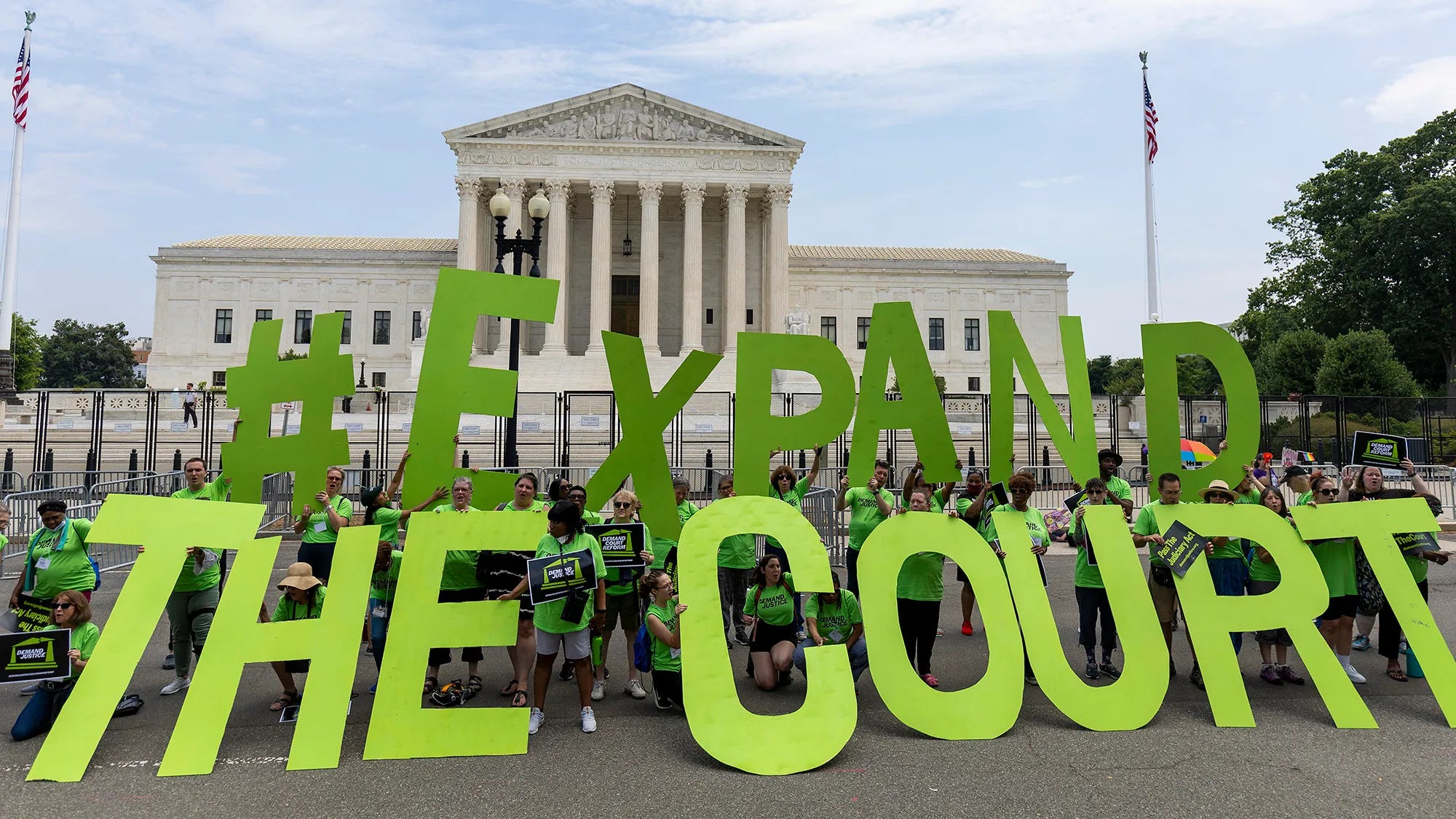
Following controversial rulings, one of the most common reform proposals is to expand the Court. The argument goes, if conservatives have captured the institution, then the solution is to add more justices until progressives regain a majority.
I have never found this persuasive. Having more of something that is fundamentally the problem has never been a meaningful solution to that problem.
When an institution is fundamentally unjust, increasing its size doesn’t transform its nature. We would never argue that the solution to mass incarceration is more prisons. We would never suggest that the answer to police violence is more police officers. We would never conclude that ICE could become a liberatory institution by hiring more agents.
Yet many people assume that increasing the number of Supreme Court justices somehow transforms the institution itself. It does not.
Expanding the Court changes who exercises power, but it leaves the structure of power untouched. The problem is not simply who sits on the bench. It is the premise that any institution of the state should possess the authority to define the limits of our freedom.
This is the premise I reject.
One of the inconsistencies I’ve noticed in progressive politics is that we often challenge the legitimacy of Supreme Court decisions we oppose while embracing the Court when it reaches conclusions we welcome. When the Court overturns abortion protections, it is condemned as political and accused of abandoning precedent. When it expands LGBTQ rights, it is celebrated as a guardian of justice.
But legitimacy cannot depend on whether we happen to agree with the outcome. If an institution is illegitimate, it remains illegitimate even when it reaches conclusions we welcome. The Supreme Court does not create justice by recognizing it, any more than it abolishes justice by denying it. Justice cannot be created—or destroyed—by judicial opinion.
The deeper problem is the institution itself. This is not an argument about individual justices. It is an argument about institutions. Institutions that carry the purposes for which they were created.
The Supreme Court did not emerge from a society committed to universal human freedom. It emerged from a settler-colonial project built through Indigenous genocide, chattel slavery, land theft, racial capitalism, and state violence. The Constitution it interprets was written while millions of human beings were enslaved. The government whose authority it protects was established through conquest. The economic system it has repeatedly defended was built through exploitation.
Why, then, would we expect an institution born from this history to become the ultimate guardian of justice?
The Supreme Court has spent much of its history protecting slavery, enforcing segregation, legitimizing Indigenous dispossession, expanding corporate power, criminalizing dissent, and narrowing democratic participation. Even when it has occasionally issued decisions that expanded freedom, those decisions almost always followed decades of organizing, resistance, and political struggle outside the courtroom.
Ultimately, my skepticism extends beyond the Supreme Court itself. It reaches the very idea that justice can be secured through rights granted by the state. This is something I’ve been wrestling with for years.
When I was writing my new book about my time as a family policing agent, the chapter I struggled with the most was one that focused on the idea of parents’ rights—the right to refuse entry into their home, the right to consent to their child being interviewed, even the right to be informed of their rights. I eventually found myself stuck with this nagging question: Even if parents’ constitutional rights were perfectly respected during every investigation, would the forcible removal of children become any less violent? Of course, the answer to that question is no.
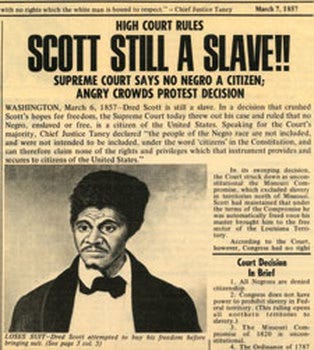
That question led me to think differently about “rights” altogether. Dred Scott lived under a constitutional order that claimed to protect freedom while denying his humanity. Black Americans during Jim Crow possessed rights that courts routinely refused to enforce. Japanese Americans had constitutional rights when they were imprisoned during World War II. Rodney King had rights when he was savagely beaten by Los Angeles police officers. Rights did not protect them because rights are only as stable as the political order willing to recognize them. History demonstrates, again and again, that states suspend, reinterpret, or ignore rights whenever those rights threaten existing power.
If something as fundamental as birthright citizenship survives today by a single vote, then citizenship itself has become contingent—not on principle, but on judicial composition.
This is why I have become increasingly skeptical of rights-based politics. Rights are often treated as the highest expression of justice. But rights are permissions granted—and withdrawn—by the state. They can be expanded under one administration and narrowed under another. They can be celebrated in one Supreme Court opinion and undermined in the next.
Justice that depends on state recognition is always conditional. And justice that is conditional can always be taken away. That is why I no longer see the Supreme Court as a guardian of justice. It is simply one of the institutions through which the state decides which rights it will recognize, and for whom.

The history of the United States shows that courts have rarely led struggles for justice. We remember decisions like Brown v. Board of Education, but we often forget that countless decisions protecting slavery, segregation, Indigenous dispossession, and corporate power came from the very same institution. Courts have not been the engine of liberation. They have reflected the political order they were created to preserve.
The question before us cannot be how we make the Supreme Court work better. The more important question is why we continue asking an institution born from conquest, slavery, and exclusion to deliver justice in the first place.
Today’s decisions are another reminder that we cannot build our politics around hoping the right people occupy the right seats at the right time. Justice that depends on state recognition will always remain conditional.
The work before us is not to make the Supreme Court a little larger or a little more representative. It is to build forms of collective power that do not require permission from institutions designed to preserve the existing order.
True justice will never be granted by a state built to deny it. It must be created by us.
In solidarity always, Alan
I hope you’ll join us on Wednesday, July 22, at 6:00 PM Eastern for our zoom discussion of 94A3625. This month we’re very honored to be joined by Dr. Kirk “Jae” James.